Wednesday, February 15, 2012

Рейтинг найкращих студентських міст світу


 Головні критерії рейтингу:
  1. Студентське розмаїття
  2. Якість життя
  3. Задоволення роботодавців якістю знань випускників
  4. Доступність навчання
Найдоступніші для освіти міста світу розташовані у континентальній Європі та в ісламському світі - Тулуза, Ліон, Відень, Берлін, Мюнхен, Каїр та Куала-Лумпур. 

Роботодавці найбільш задоволені якістю знань випускників у Сингапурі. Друге ж місце за цим показником посіла столиця Франції Париж.

Нью-Йорк, через дороге навчання та життя, розташувався лише на 18-у щаблі рейтингу, поступившись у Північній Америці Бостону, Монреалю, Чикаго та Сан-Франциско. В Азії найкращим студентським містом визнано Сингапур. Серед посткомуністичних країн найвище, 37-е місце, посіла Москва.

№1 - PARIS, France


    Top 500 universities in Paris:

  • ENS Paris;
  • Ecole Polytechnique ParisTech;
  • Université Pierre et Marie Curie (UPMC);
  • Sciences Po Paris;
  • Université Paris-Sorbonne (ParisIV);
  • Université Paris-Sud II;
  • Université Paris I Pantheon-Sorbonne;
  • Université Paris Diderot – Paris 7;
  • École des Ponts ParisTech;
  • Université Paris Descartes;
  • Université Paris Dauphine;
  • Université Panthéon-Assas (Paris 2);
  • Université Paris Ouest Nanterre La Défense;
  • ESCP Europe;
  • ESSEC Business School, Paris;
  • HEC Paris

Student life in Paris

Unlike London and Boston, Paris does not have a global top 30 university, so it may come as a surprise to some that it ranks as the top city in the world for international students. But consider this: Paris has 16 institutions in the QS World University Rankings, comfortably more than any other city on the planet; international tuition fees are a fraction of those in the UK, Australia and North America; situated in the heart of Europe, Parisian graduates are targeted by a vast range of employers throughout the continent; and perhaps most importantly for students, all of this takes place in one of the most historic, culturally vital and beautiful cities imaginable. There's a reason why Paris is the most visited city in the world.

Elite Parisian universities such as ENS Paris, Ecole Polytechnique, Sciences Po and the Sorbonne have produced some of the most important philosophers, theorists, scientists, and mathematicians of the last 100 years, not to mention seminal movements in literature, film and art. Students often enjoy extensive access to leading academics, with small class sizes and intensive teaching belying the universities' low tuition fees. Paris is frequently rated as one of the most liveable cities in Europe, and it scores highly in the quality of living indicator. Perhaps the only real drawback for students is that socializing in Paris can be a costly affair – but then it's also a city that excels in the things that come for free.

№2 - LONDON, UK


Top 500 universities in London:

  • Imperial College London;
  • UCL (University College London);
  • King's College London (KCL);
  • London School of Economics and Political Science (LSE);
  • Queen Mary, University of London (QMUL);
  • Royal Holloway University of London;
  • SOAS – School of Oriental and African Studies, University of London;
  • Brunel University;
  • City University London;
  • Birkbeck College, University of London;
  • Goldsmiths, University of London;
  • London School of Hygiene and Tropical Medicine

Student life in London

With Imperial and UCL ranked among the world's top ten universities, alongside LSE, which makes the top five for social sciences, perhaps only Boston can rival London's credentials as a nerve-centre of global academia. World-class facilities such as the British Library, with one of the most extensive and important collections of books and manuscripts in the world, make London a magnet for students and researchers from all over the planet. Yet London also offers far more to students as a city: one of the world's great centres of culture and creativity, famed for its nightlife and diversity, there aren't many things that you could hanker for as a student that aren't on offer in abundance in London.

London is one of the world's most important financial centres, so for corporate-minded graduates it is a land of opportunity. Yet it is also one of the most important cities in the world in media and the arts, as well as a host of other industries. London isn't getting any cheaper – for international students, tuition fees at the city's top universities approach those charged in the US, while home and EU undergraduate students will be affected by major fee increases implemented in 2012. And that's before you even start thinking about rent and living costs. Yet for many, the concentration of world-class universities and facilities, the professional and social opportunities, and a mind-boggling cultural confluence that mixes the corporate and the alternative, the historical and the cutting-edge, still makes studying in London worth every penny.

№ 3 - BOSTON, USA


Top 500 universities in Boston:

  • Harvard University;
  • Massachusetts Institute of Technology (MIT);
  • Boston University;
  • Tufts University;
  • Brandeis University;
  • Boston College;
  • Northeastern University
Profile: Boston's two highest-ranked institutions are actually in neighbouring Cambridge, Massachusetts, part of the Greater Boston area but not the city proper. But let's face it, one of the things that make studying at Harvard or MIT so appealing – aside from the fact that they're two of the greatest universities in the world – is that you have Boston on your doorstep. And what a doorstep it is too. One of the most historic cities in the US, Boston combines the hustle and bustle of a major metropolis, and a happening arts, politics and culture scene, with an abundance of green open space and the stunning autumnal colours for which New England is famous.

Boston's cluster of historic universities has earned it the additional nickname, 'The Athens of America'. With Harvard and MIT ranked numbers two and three in the world and Boston University also in the global top 100, Boston/Cambridge scores predictably highly in the ranking indicator, but also ranks well for student mix, quality of living, and employer activity. The only major drawback is costs – the ticket prices at Harvard and MIT approach a gobsmacking US$50,000 per year, though in reality needs-blind admission and generous financial aid packages mean that many students pay significantly less than this.

№4 - MELBOURNE, Australia


Top 500 universities in Melbourne:

  • The University of Melbourne;
  • Monash University;
  • RMIT University;
  • La Trobe University;
  • Deakin University;
  • Swinburne University of Technologyä

About Melbourne

Higher education is Australia's number one services industry, and it's not hard to see why the nation is such a popular destination for international students: its combination of world-class universities, favourable employment prospects, high quality of life and idyllic climate doesn't take much selling. However, whereas Sydney is larger, Melbourne has a growing reputation for the quality of its universities, and now ranks as Australia's number one city for international students.

Found three times to be the world's most liveable city according to an annual survey by The Economist, a UNESCO city of literature, and home to the world's first ever feature film, Melbourne is Australia's cultural hub. With six global top 500 universities in a population of just over 4 million the city also has a high concentration of students for its size. The current strength of the Australian dollar means all of the nation's cities suffer in the affordability weighting, based on the Mercer and Big Mac cost indices alongside international tuition fees. However, take away the affordability score and Melbourne would finish above Paris, London and Boston, suggesting that, for those for whom it is a financial possibility, Melbourne provides just about the most favourable study environment around.

№5 - VIENNA, Austria


Top 500 universities in Vienna:

  • Universität Wien;
  • Technische Universität Wien

Profile: Vienna might not be the first city that springs to mind as a magnet for international students, but there's much more to the Austrian capital than fugues and psychoanalysis. Frequently ranked as one of the world's most liveable cities and with some of the lowest tuition fees around for international students, Vienna is also home to Austria's two highest-ranked universities, Universität Wien and Technische Universität Wien. One of Europe's most historical capitals, Austria is awash with cultural riches, from the theatres and concert halls that witnessed the earliest performances of masterpieces by Mozart, Beethoven and Schubert, to the Sigmund Freud Museum, and numerous galleries displaying the works of Viennese artists such as Gustave Klimt and Egon Schiele.

Vienna is helped into the top five in the QS Best Cities Ranking by its favourable student mix and its status as the top-scoring city for quality of living. With just two universities in the QS World University Rankings, the highest of which is Universität Wien at 155, Vienna may not be able to compete with the likes of London and Boston for those looking for world-class universities. However for students looking for high quality of living combined with culture and affordability, Vienna is pretty hard to beat.

№6 - SYDNEY, Australia


Top 500 universities in Sydney:

  • The University of Sydney;
  • The University of New South Wales (UNSW);
  • Macquarie University;
  • University of Technology, Sydney (UTS);
  • University of Western Sydney

Overview of student life in Sydney

Melbourne may lay claim to being Australia's city of culture, but it is Sydney that serves as its financial and economic hub. With the stunning panorama of Sydney Harbour, including its famous opera house, exotic parks dotted throughout the city, and some of the most renowned beaches on the planet well within striking distance, Sydney could lay a strong claim to be one of the most aesthetically pleasing of all major study destinations.
Like fellow Australian cities Melbourne, Brisbane and Perth, Sydney's sun-kissed climate, prosperity and outdoor lifestyle mean it has among the highest scores for quality of living, having been ranked as one of the ten most liveable cities in the world by both Mercer and The Economist. And like Melbourne, it also features a high concentration of students relative to its population, with five universities ranked among the global top 500, of which University of Sydney and University of New South Wales make the top 100.


№7 - ZURICH, Switzerland


Top 500 universities in Zurich:

  • ETH Zurich (Swiss Federal Institute of Technology);
  • University of Zurich
Profile:Renowned for its prosperity, orderliness and low taxes, Zurich may sound more like a place for millionaires than international students, but there is also a great deal to recommend it as a study destination. ETH Zurich is the highest ranked university in continental Europe and one of the top 20 in the world, while University of Zurich ranks 106. Situated on the banks of picturesque Lake Zurich and surrounded by dramatic scenery, the city has a calm and serene atmosphere, yet is enough of a global capital to be packed with things to do. It has frequently been ranked as one of the world's most liveable cities.

Zurich is also the wealthiest city in Europe, which brings with it both pros and cons for international students. On the one hand its affluence means Zurich is clean, safe and immaculately maintained, but on the other, living expenses can be eye-wateringly high. That said, while rent and socialising may cost a packet, tuition fees averaging around US$1,000-2,000 for international students represent a huge saving compared to comparably prestigious universities in the UK, North America or Australia.

№8 - BERLIN, Germany


Top 500 universities in Berlin:

  • Freie Universität Berlin;
  • Humboldt- Universität zu Berlin;
  • Technische Universität Berlin
Profile: Berlin can stake a credible claim to being one of the coolest cities in the world. During the past decade its cultural scene has flourished, turning it into a major centre of design, fashion, music and art to rival New York and London. More so than those cities however, Berlin is still easily affordable on a student budget, while also being enough of a global financial centre to appeal to those whose outlook is of a more corporate nature. Comfortably the most affordable city in the top ten, Berlin combines cheap rent and living costs with tuition of fees of just US$1,000-2,000 for both home and international students alike, representing a saving of thousands compared to universities in many other countries.

Though not an academic hub on the scale of London, Paris or Boston, Berlin is home to two global top 150 universities (Freie Universität Berlin, ranked 66, and Humboldt-Universität zu Berlin, 132) as well as Technische Universität Berlin (205). It is also gaining a growing reputation as a destination for international students due in part to greater provision of courses in English, particularly at graduate level. With a high quality of living, affordability, a liberal atmosphere and a happening party scene, Berlin has a huge amount to offer international students of all interests and persuasions.

№8 - DUBLIN, Ireland
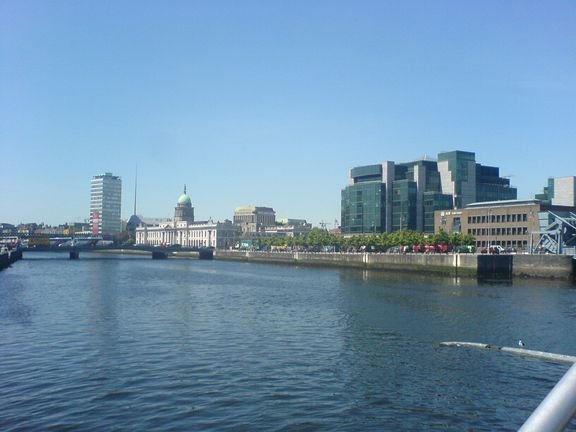


Top 500 universities in Dublin:

  • Trinity College Dublin (TCD);
  • University College Dublin (UCD);
  • Dublin City university (DCU);
  • Dublin Institute of Technology
Profile:For those whose idea of a perfect study destination involves combining top-class study facilities and historic surroundings with a cracking social scene and famously friendly locals, Dublin is your place. Cultural mainstays such as 'the craic', Guinness and St Patrick's Day may have spawned a global Irish cliché industry, but if you visit the real thing you'll see why there are so many imitations. Dublin has become a more multicultural and cosmopolitan place in the past two decades but at its heart remains a tradition and culture that is all its own.

Dublin's two oldest and most prestigious universities are Trinity College Dublin and University College Dublin, ranked 65 and 134 in the world respectively. Between them they have produced famous names in a range of disciplines, but they are perhaps best-known for their alumni authors: Samuel Beckett, James Joyce, Oscar Wilde, WB Yeats and many more. Dublin has a high concentration of students and a high ratio of international students, and is well ranked for its quality of living. On the negative side, tuition fees don't come cheap for international students (up to US $26,000 per year at TCD) and that's before you even calculate your Guinness budget.


№10 - MONTREAL, Canada


Top 500 universities in Montreal:

  • Université de Montréal;
  • Concordia University
Profile: Home to the nation's top institution, McGill University (ranked 17th in the world), Montreal has been dubbed the cultural capital of Canada, and one of the world's most liveable cities. As a French-speaking city in a largely English-speaking nation that has experienced mass immigration from all over the world in the past decades, Montreal has a distinctly hybrid culture. The site of several major international festivals including the Montreal International Jazz Festival and the world's largest comedy festival, Just for Laughs, Montreal also has a world-renowned indie music scene. It is also one of the three UNESCO design capitals of the world.

Montreal has one of the highest scores for quality of living, alongside a favourable student mix and rankings score, largely courtesy of the world-class status of McGill, with Universite de Montreal also making the global top 200 and Concordia University the top 600. Though tuition fees for international students are costly compared to the cheapest destinations such as continental Europe, they still compare favourably to those charged at many top universities in the UK, US and Australia. And for cost of living, Montreal is the best-value destination in the top ten behind Boston and Berlin.

№11 - BARCELONA, Spain


Top 500 universities in Barcelona:

  • Universitat de Barcelona (UB);
  • Universitat Autónoma de Barcelona;
  • Universitat Pompeu Fabra;
  • Universitat Politècnica de Catalunya;
  • ESADE Business School

Student life in Barcelona

With its sunny climate, sociable lifestyle, sandy beaches, renowned culinary tradition, long artistic and cultural legacy, stylish, cosmopolitan city centre and legendary party scene, Barcelona offers one of Europe’s most appealing environments in which to live and study. It is also home to Spain’s two most prestigious universities, Universitat de Barcelona and Universitat Autónoma de Barcelona, which both rank in the global top 200, as well as three other institutions in the top 700. 

Barcelona is one of the most prosperous cities in Europe, yet living costs remain reasonable compared to the likes of London and Paris. Tuition costs are comparable to those in France, making Barcelona one of the most affordable of the leading student cities. The reputation of graduates of Barcelona’s universities among international employers is also strong, indicating positive employment prospects for international students who choose to study there.

№12 - SINGAPORE


Top 500 universities in Singapore:

  • National University of Singapore (NUS);
  • Nanyang Technological University (NTU)

Student life in Singapore

Small but densely populated, Singapore's reputation as a centre of educational excellence has flourished in recent years. National University of Singapore ranks third in Asia and 28th in the world, and the young but upwardly mobile Nanyang Technological University has broken into the global top 60, thanks in part to its recruitment of top international academics and students. Singapore's culture exhibits a blend of Chinese, Malay and Indian influences with four official languages, and this diversity is mirrored in the combined student body of its universities, which is among the most internationally diverse in the world.

Singapore is renowned for its prosperity and low levels of crime and unemployment. In keeping with its clean-cut, corporate reputation, Singapore graduates are much sought-after by international employers, especially throughout Asia. This will be good news for prospective students, because the downside to Singapore's high standard of living is correspondingly high prices. One thing you certainly won't need to shell out for in Singapore is central heating; its position next to the equator means it is equally scorching all year round. And if you fancy exchanging the concrete jungle for the real thing, Singapore is surrounded by tropical scenery, both throughout adjacent Malaysia, and in nearby exotic destinations such as Indonesia, Cambodia, Vietnam and the Philippines.

№13 - MUNICH, Germany


 Top 500 universities in Munich:

  • Technische Universität München;
  • Ludwig-Maximilians-Universität München

Student life in Munich

Located deep in Germany's southernmost region Bavaria, Munich is the nation's third largest city, and its affluence and vibrancy have led it to be ranked as the most desirable in the nation in which to live. Of course, for many people outside of Germany, Munich is known first and foremost as the beer capital of the world – home to Oktoberfest, one of the world's biggest and booziest parties, which every year draws tourists in their hoards to quaff the local brew. This, of course, is unlikely to come as unwelcome news for many prospective students.

Local universities Technische Universität München and Ludwig-Maximilians-Universität München are among the best in continental Europe, ranking two and three in Germany, and 54 and 62 in the world respectively. With just two institutions, Munich may not have a particularly high volume of students, but it has a high ratio of international students and is one of the top ranking cities in the world for quality of living. As in all German universities, tuition fees are extremely low for domestic and international students alike, and although living costs tend to be slightly higher in Munich than they are in Berlin, this still makes it one of the most affordable student cities around.

№14 - LYON, France


 Top 500 universities in Lyon:

  • Ecole Normale Superiéure de Lyon;
  • Université Claud Bernard Lyon I;
  • Université Lumière Lyon 2;
  • Université Jean Moulin Lyon 3

Student life in Lyon

Positioned at the picturesque confluence of the Rhône and Saône rivers, with a charming medieval centre that is illuminated beautifully after dark, Lyon is known as the gastronomic capital of France – which is saying something. It is also home to one of the nation's top institutions, Ecole Normale Supérieure de Lyon (ranked fourth in France and 133 in the world), plus three others that make the global top 700: Université Claude Bernard Lyon 1, Université Lumière Lyon 2 and Université Jean Moulin Lyon 3.

With four major universities in a city of under one and a half million, as you would expect Lyon has a buzzing student scene, and this is reflected in high scores for student mix, as well as quality of living. What's more, Lyon is also the most affordable student city in the top 20, with tuition fees of less than US$1,000 per year mixed with low living costs. Paris may steal the limelight with its cluster of famous institutions and iconic sights, but for those looking for a French study experience on a shoestring Lyon has plenty to recommend it.

№15 - CHICAGO, USA


  Top 500 universities in Chicago:

  • University of Chicago;
  • Northwestern University;
  • University of Illinois, Chicago (UIC);
  • Illinois Institute of Technology;
  • Loyola University Chicago

Student life in Chicago

Chicago is a fast-paced, high-rise economic hub, but it is also a city that famously knows how to let its hair down. Nicknamed 'The Windy City', an explosion of blues and jazz music during the 20th century gave the city a reputation as the north US's answer to New Orleans. Chicago is also home to two of the nation's most prestigious universities, the University of Chicago (ranked eighth in the world), and Northwestern University (ranked 24), plus three others that make the global top 600.

Chicago ranks as one of the top ten cities for the prestige of its universities, though scores less favourably for student mix and employer activity compared to the highest ranked student cities. As in other US cities, affordability is a weakness, driven primarily by the tuition fees charged by leading private institutions such as University of Chicago, which are among the highest in the world. That said, there is a reason why the top US universities are world leaders, and for many students the exceptional facilities on offer – alongside the myriad social and cultural opportunities offered by this bustling metropolis – will make studying in Chicago more than worth the investment.

№16 - MADRID, Spain


Top 500 universities in Madrid:

  • Universidad Autonóma de Madrid;
  • Universidad Complutense de Madrid (UCM);
  • Universidad Carlos III de Madrid;
  • Politécnica de Madrid

Student life in Madrid

Spain's capital and most populous city, Madrid is one of Europe's major financial, administrative and cultural centres, as well as being a tourist magnet with a legendary nightlife and gastronomic tradition. Home to the famous galacticos of Real Madrid, it also boasts some of the world's most important art galleries, such as the Prado, as well as a chic fashion scene. International students may be just as interested to know that the city is famed for its outgoing and sociable lifestyle: lengthy siestas, leisurely evenings socializing at the city's innumerable tapas bars, and late, late nights out at the weekends.

Madrid scores well above average in all of the indicators, its strongest aspects being quality of living and student mix. Academically, it offers four universities in the global top 500, led by Universidad Autónoma de Madrid at 222. Being a major European capital, as you might expect, the cost of living in Madrid is reasonably high. However, as in several other European countries, this is counterbalanced by affordable fees averaging between $2,000-4,000 per year for international undergraduate students.

№17 - SAN FRANCISCO, USA


Top 500 universities in San Francisco:

  • Stanford University;
  • University of California, Berkley (UCB);
  • University of California, San Francisco (UCSF)

Student Life in San Francisco

Lying adjacent to California's famed innovation hub Silicon Valley, San Francisco is within striking distance of two of the world's most prestigious universities, Stanford and Berkeley, as well as UC San Francisco. Made famous in the 1960s as the home of flower power, San Francisco remains one of the US's most iconic and frequently visited cities. With its famously laidback coastal lifestyle and sunny climate, San Francisco is also among the top-ranked cities in the world for quality of living. Not that it's all lounging about on the beach – one of the world's top ten financial centres, the San Francisco Bay Area is home to hundreds of cutting-edge technology companies including the likes of Apple, Facebook and IBM.

№18 - NEW YORK, USA


Top 500 universities in NY:

  • Columbia University;
  • New York University (NYU);
  • Rutgers – The State University of New Jersey, New Brunswick;
  • Yeshiva University;
  • City University of New York;
  • University of Delaware;
  • Rutgers – The State University of New Jersey, Newark;
  • Stevens Institute of Technology;
  • Fordham University;
  • Rockefeller University

Student life in New York

With ten internationally ranked universities located in the New York area, the city has long been a magnet for thousands of international students seeking the finest education money can buy. Only Paris and London score higher for the quantity and quality of their universities. The main factor that stops New York from joining these cities at the very top of the table is a low score for cost of living, with top-dollar tuition fees combining with the soaring price of rent in this most sought-after of locations.

What is in little doubt is that for those for whom it is a financially viable option, New York offers a virtually inexhaustible supply of things to see and do. Home to many of the most important movers and shakers in world culture, business, finance and the media, and pulsating with energy 24/7, the Big Apple will keep throwing up enough surprises and new experiences to keep you going for an entire lifetime, let alone an undergraduate degree program.

№19 - TOKYO, Japan


  Top 500 universities in Tokyo:

  • The University of Tokyo;
  • Tokyo Institute of Technology;
  • Waseda University;
  • Keio University;
  • Tokyo University of Science;
  • Tokyo Medical and Dental University;
  • Tokyo Metropolitan University;
  • Ochanomizu University;
  • Aoyama Gakuin University;
  • Hitotsubashi University

Student life in Tokyo

For those who want to study amidst the hustle and bustle of the big city, they don't come much bigger and busier than Tokyo, the third most populous in the world. Such is the mind-blowing scale of the Japanese capital that even with ten internationally ranked universities it still has the lowest proportionate student population of any city in the top 50. Tokyo, then, is a city for those who favour total immersion in local culture rather than living in a student bubble.

Accordingly, life in Tokyo makes few concessions to a student budget: it has the lowest score for cost of living of any city in the top 50, and is rated by Mercer as the second most expensive city in the world for expatriate employees. However, the upshot of Tokyo's gargantuan size is that it offers one of the most varied and cosmopolitan living environments on earth. As one of the world's three financial epicentres alongside New York and London it also provides enviable professional and internship opportunities, and scores highly for both domestic and international employer activity.

 21- Milan, Italy

22 - Brisbane, Australia

23 - Seoul, Korea

24 - Buenos Aires, Argentina

25 - Perth, Australia

26 - Toronto, Canada

27 - Stockholm, Sweden

28 - Beijing, China

29 - Adelaide, Australia

30 - Washington DC, USA

31 - Vancouver, Canada

31 - Mexico City, Mexico

33 - Helsinki, Finland

34 - Taipei, Taiwan

35 - Manchester, UK

36 - Amsterdam, Netherlands

37 - Moscow, Russia

38 - Brussels, Belgium

39 - Shanghai, China

39 - Copenhagen, Denmark

41 - Santiago, Chile

42 - Philadelphia, USA

43 - Kyoto, Japan

44 - Kuala Lumpur, Malaysia

45 - Sao Paolo, Brazil

46 - Toulouse, France

47 - Birmingham, UK

48 - Cairo, Egypt

49 - Bangkok, Thailand

50 - Glasgow, UK

Source - topuniversities.com

Reasons why Israel is likely to attack Iran

Washington Post columnist David Ignatius created a tempest last week when he reported U.S. Defense Secretary Leon Panetta's prediction that Israel will attack Iran and its nuclear complex "in April, May or June." Ignatius's column was as startling as it was exasperating. When the sitting U.S. defense secretary -- presumably privy to facts not generally available to the public -- makes such a prediction, observers have good reasons to pay attention. On the other hand, the international community has been openly dealing with the Iranian nuclear issue for nearly a decade, with similar crescendos of anticipation having occurred before, all to no effect. Why would this time be different?

Further, an Israeli air campaign against Iran would seem like an amazingly reckless act. And an unnecessary one, too, since international sanctions against Iran's banks and oil market are just now tightening dramatically. 

Yet from Israel's point of view, time really has run out. The sanctions have come too late. And when Israeli policymakers consider their advantages and all of the alternatives available, an air campaign, while both regrettable and risky, is not reckless.
Here's why:

1. Time pressure
In his column, Ignatius mentioned this spring as the likely deadline for an Israeli strike. Why so soon? After all, the Iranian program is still under the supervision of IAEA inspectors and Iran has not made any moves to "break out" toward the production of bomb-grade highly enriched uranium.

But as a new report from the Bipartisan Policy Center discusses, Iran's uranium enrichment effort continues to advance, even after the Stuxnet computer attack and the assassination of several of its nuclear scientists. According to the report, Iran seems to be successfully installing advanced, high-efficiency uranium-enrichment centrifuges, which foreshadows a significant increase in enrichment capacity and output in the near future. More ominously from Israel's perspective, Iran is now installing centrifuge cascades into the Fordow mountain site near Qom, a bunker that is too deep for Israeli bombs to penetrate.

On-site IAEA inspectors are currently monitoring Iran's nuclear fuel production and would report any diversions to military use. As Tehran undoubtedly assumes, such a "breakout" (tossing out the inspectors and quickly enriching to the bomb-grade level) would be a casus belli, with air strikes from Israel likely to soon follow. Israeli leaders may have concluded that Iran could break out with impunity after the Fordow site is operational and the enrichment effort has produced enough low-enriched uranium feedstock for several bombs. According to the Bipartisan Center report, Iran will be in this position later this year. According to the New York Times, U.S. and Israeli officials differ over their calculations of when Iran will have crossed into a "zone of immunity." Given their more precarious position, it is understandable that Israeli policymakers are adopting a more conservative assessment. 

2. Alternatives to military action now fall short
Israeli leaders undoubtedly understand that starting a war is risky. There should be convincing reasons for discarding the non-military alternatives.

The international sanctions effort against Iran's banking system and oil industry are inflicting damage on the country's economy and seem to be delivering political punishment to the regime. But they have not slowed the nuclear program, nor are they likely to have any effect on the timeline described above. And as long as Russia, China, India, and others continue to support Iran economically and politically, the sanctions regime is unlikely to be harsh enough to change Israel's calculation of the risks, at least within a meaningful time frame.
Why can't Israel's secret but widely assumed nuclear arsenal deter an Iranian nuclear strike? Israel's territory and population are so small that even one nuclear blast would be devastating. Israel would very much like to possess a survivable and stabilizing second-strike retaliatory capability. During the Cold War, the United States and the Soviet Union achieved this mainly with their ballistic missile submarine fleets, which were always on patrol and held each others' cities at risk. Israel does not have large numbers of submarines or any nuclear-powered subs capable of long submerged patrols. Nor can it be confident that its policymakers or command-and-control systems would survive an Iranian nuclear first strike.

Even if Iran sought a nuclear weapons capability solely to establish its own defensive deterrent, the outcome would be gross instability in the region, very likely leading to one side or the other attempting a preemptive attack (the Iranian government denies that its nuclear program has a military purpose). Very short missile flight times, fragile early-warning and command systems, and no survivable second-strike forces would lead to a hair-trigger "use it or lose it" dynamic. An Israeli attack now on Iran's nuclear program would be an attempt to prevent this situation from occurring.

3. The benefits of escalation
A strike on Iran's nuclear complex would be at the outer boundary of the Israeli Air Force's capabilities. The important targets in Iran are near the maximum range of Israel's fighter-bombers. The fact that Iraq's airspace, on the direct line between Israel and Iran, is for now undefended is one more reason why Israel's leaders would want to strike sooner rather than later. Israel's small inventory of bunker-buster bombs may damage the underground uranium enrichment plant at Natanz, but they will likely have no effect on the Fordow mountain complex. Iran has undoubtedly dispersed and hidden many other nuclear facilities. An Israeli strike is thus likely to have only a limited and temporary effect on Iran's nuclear program.
If so, why bother, especially when such a strike risks sparking a wider war? Israel's leaders may actually prefer a wider escalating conflict, especially before Iran becomes a nuclear weapons state. Under this theory, Israel would take the first shot with a narrowly tailored attack on Iran's nuclear facilities. 

Paradoxically, Israel's leaders might then prefer Iranian retaliation, which would then give Israel the justification for broader strikes against Iran's oil industry, power grid, and communication systems. Even better if Iran were to block the Strait of Hormuz or attack U.S. forces in the region, which would bring U.S. Central Command into the war and result in even more punishment for Iran. Israel's leaders may believe that they enjoy "escalation dominance," meaning that the more the war escalates, the worse the consequences for Iran compared to Israel. Israel raided Iraq's nuclear program in 1981 and Syria's in 2007. Neither Saddam Hussein nor Bashar al-Assad opted to retaliate, very likely because both knew that Israel, with its air power, possessed escalation dominance. Israel's leaders have good reason to assume that Iran's leaders will reach the same conclusion.

What about the rockets possessed by Hezbollah and Hamas, Iran's proxies north and south of Israel's population centers? Israel's leaders may believe that they are much better prepared to respond to these threats than they were in 2006, when the Israeli army struggled against Hezbollah. There is no guarantee that Hezbollah and Hamas will follow orders from Tehran to attack -- they understand the punishment the reformed Israeli army would inflict. Hezbollah may now have an excellent reason to exercise caution. Should the Assad regime in Damascus collapse, Hezbollah would likely lose its most important protector and could soon find itself cut off and surrounded by enemies. It would thus be a particularly bad time for Hezbollah to invite an Israeli ground assault into southern Lebanon.
4. Managing the endgame
An Israeli raid on Iran's nuclear complex would probably not lead to the permanent collapse of the program. Iran could dig out the entrances to the Fordow site and establish new covert research and production facilities elsewhere, perhaps in bunkers dug under residential areas. Israel inflicted a major setback on Iraq's program when it destroyed the unfinished Osirak reactor in 1981. Even so, Saddam Hussein covertly restarted the program. Israel should expect the same persistence from Iran.

So is there any favorable end-state for Israel? Israeli leaders may envision a long term war of attrition against Iran's program, hoping to slow its progress to a crawl while waiting for regime change in Tehran. Through sporadic follow-up strikes against nuclear targets, Israel would attempt to demoralize the industry's workforce, disrupt its operations, and greatly increase the costs of the program. Israeli leaders might hope that their attrition tactics, delivered through occasional air strikes, would bog down the nuclear program while international sanctions weaken the civilian economy and reduce political support for the regime. The stable and favorable outcome for Israel would be either Tehran's abandonment of its nuclear program or an internal rebellion against the regime. Israel would be counting more on hope rather than a convincing set of actions to achieve these outcomes. But the imperative now for Israel is to halt the program, especially since no one else is under the same time pressure they are.

Israel should expect Tehran to mount a vigorous defense. Iran would attempt to acquire modern air defense systems from Russia or China. It would attempt to rally international support against Israeli aggression and get its international sanctions lifted and imposed on Israel instead. An Israeli assault on Iran would disrupt oil and financial markets with harmful consequences for the global economy. Israel would take the blame, with adverse political and economic consequences to follow. 

But none of these consequences are likely enough to dissuade Israel from attacking. A nuclear capability is a red line that Israel has twice prevented its opponents from crossing. Iran won't get across the line either. Just as happened in 1981 and 2007, Israel's leaders have good reasons to conclude that its possession of escalation dominance will minimize the worst concerns about retaliation. Perhaps most importantly, Israel is under the greatest time pressure, which is why it will have to go it alone and start what will be a long and nerve-wracking war.

Source - Foreign Policy

Poland's Energy Sector and Russia's Position: Part 1


JANEK SKARZYNSKI/AFP/Getty Images
Grupa Lotos refinery in Gdansk, Poland

That Poland depends on Russia for energy resources, particularly oil and natural gas, gives Moscow political leverage over Warsaw. However, significant natural gas development could help Poland reduce its dependence on Russia, meet EU environmental standards and boost its regional power as a possible natural gas exporter. Polish energy diversification projects -- liquefied natural gas import terminal construction and shale gas development -- embody this strategy, which could change the Russia-Poland relationship in the coming years.

Analysis
Like most Central and Eastern European countries, Poland depends heavily on Russia for energy supplies. Similar to its strategy concerning other European countries, Russia uses this dependence as a political tool and in the past has implemented energy cutoffs and politically motivated pricing mechanisms to exert its influence in the region. However, diversification efforts in Poland and policy changes in the European Union likely will affect Russia's position in Poland's energy sector, as well as Russia's political heft in both Poland and the wider region.

Poland is in a better position than many other Central and Eastern European countries concerning energy production. Poland is a major coal producer, and coal comprises a significant portion of Poland's primary energy supply. The country also has some domestic natural gas production, whereas many other Central and Eastern European countries rely completely on Russia for natural gas. However, Russian oil and natural gas imports amount to nearly half of Poland's primary energy supply, and these inputs are set to grow as Polish energy demand increases and Warsaw continues to diversify away from coal for numerous reasons.

Still, Poland is unique in Central and Eastern Europe in that it is following through with significant diversification projects, such as the construction of a liquefied natural gas (LNG) import terminal. Poland also has the potential to further diversify through shale gas resource development (though prospects for this are much less clear).

Poland's Energy Supply
A breakdown of Poland's energy supply is necessary in order to accurately gauge Russia's influence in the sector and add context to Warsaw's diversification efforts.

Historically, coal has been the most important energy source in Poland. The country's three largest coal-mining companies -- Weglokoks, Kompania Weglowa and Jastrzebska Spolka Weglowa -- extract approximately 100 million tons of coal per year. Coal makes up more than 50 percent of Poland's primary energy supply and roughly 85 percent of the country's electricity generation. However, diversification away from coal to natural gas and other energy sources in order to meet the EU environmental standards is becoming a priority for Warsaw.

Oil is another important energy source in Poland, comprising 26 percent of the country's primary energy supply. Poland's demand was 535,000 barrels per day in 2009. The country imports almost all of its crude oil, including 94 percent from Russia, mainly via the Druzhba pipeline. Poland depends less on Russia for refined products, however, importing roughly 25 percent. Poland has six refineries, with PKN Orlen and Grupa Lotos the major Polish companies responsible for refining and fuel stations.

Poland's third major energy source is natural gas, which makes up 13 percent of the country's primary energy supply and 3 percent of its electricity generation. Poland produced 5.9 billion cubic meters (bcm) in 2009, or 37 percent of the country's total demand of 15.8 bcm. PGNiG is the main Polish natural gas company, responsible for 98 percent of domestic natural gas production while serving as Poland's only natural gas importer, only operator of the country's underground natural gas storage capacity and effective controller of the wholesale natural gas market.

Although natural gas is the smallest major energy input in Poland, it is in many ways the most strategic to the region. Unlike oil, natural gas cannot be delivered via tanker unless it is liquefied, which limits the number of suppliers in Central and Eastern Europe. Currently there are no operational LNG terminals in the region, so the only regional delivery method is through pipeline. And the current pipeline infrastructure dictates that the dominant natural gas supplier for Central and Eastern Europe -- including Poland -- is Russia.

In 2010, Poland imported 10 bcm of natural gas from Russia, or 82 percent of Poland's imports, via the Yamal pipeline. An additional 1 bcm (11 percent) is Russian natual gas transited through Germany, meaning that Poland depends on Russia for virtually all of its natural gas imports. This dependence is expected to grow; PGNiG signed a ten-year contract with Russian energy giant Gazprom in October 2010 to import 11 bcm starting in 2012. The deal also made Polish State Treasury-owned Gaz-System -- established in 2004 as an independent transmission system operator as a result of PGNiG's unbundling -- the operator of the Yamal pipeline in Poland (Gaz-System previously owned and operated all the natural gas transmission and distribution pipelines in Poland except Yamal, which was previously owned by EuRoPol Gaz).

Diversification Projects
As Poland has sought more energy independence from Russia, Warsaw has begun pursuing two key areas of energy diversification: LNG and shale gas.

LNG is Poland's primary diversification priority in the near to mid-term. The first LNG import terminal in Central and Eastern Europe is under construction in the northern Polish town of Swinoujscie. Polskie LNG, a subsidiary of Gaz-System, is constructing the terminal and will operate it upon its 2014 completion. The terminal will have a capacity of 5 bcm, with the possibility of expansion to 7.5 bcm at a later date.

The terminal will allow Poland to access numerous LNG providers and purchase natural gas that is roughly $100-150 per thousand cubic meters (tcm) cheaper than Russian natural gas (industry estimates for LNG are currently in the $290-$350 per tcm range, while Poland pays $500 per tcm for Russian natural gas). PGNiG and Qatargas signed a 20-year agreement in 2009 for the purchase of 1.5 bcm per year beginning in 2014. While long-term contracts such as the Qatargas deal are the traditional mode of sale for LNG, Poland likely will reserve the option of spot purchasing as well. The Swinoujscie terminal's 5 bcm capacity could nearly halve Poland's dependence on Russia for natural gas in the next few years, significantly contributing to Poland's energy diversification. However, this assumes that the country will use all 5 bcm to cut imports from Russia and that demand will not grow, both of which are unlikely. But, while it might not fully shift the energy balance, the terminal will certainly lessen the pressure Poland feels from Russia and the leverage Moscow has over Warsaw.

In the longer term, Poland is focused on developing its unconventional natural gas resources, including shale gas. Since shale gas development began in Poland in 2009, more than 100 concessions have been issued to both domestic companies and larger international companies such as ExxonMobil, Chevron Corp., ConocoPhillips and Marathon. Preliminary estimates suggest that Poland could have 1.4-5 tcm of shale gas, the development of which could change Poland's energy situation dramatically.

However, there are numerous obstacles to the commercialization of shale gas -- including capital intensiveness, environmental concerns and the proximity of resources to existing distribution infrastructure -- and early testing and drilling has not been a smooth process. ExxonMobil reported in early February that two initial wells undergoing exploratory drilling had "insufficient amounts of gas" for commercial exploitation. However, ExxonMobil subsequently said it would drill another six wells, demonstrating its commitment to the process. Similarly, PGNiG is boosting upstream investment in shale development, and there have been some promising early results from companies such as Dublin-based San Leon Energy.

A recent corruption scandal about the shale gas concessions awarding process led to charges filed against several government officials, but the incident is unlikely to hamper development since the resource is broadly popular with the Polish public. Its popularity is rooted in the potential for shale gas to become a strategic boon for Poland. Development could rid the country of its dependence on Russia and possibly make Poland a natural gas exporter to other Central and Eastern European countries, thus contributing to Poland's role as a regional leader. But shale gas development is a long-term process that -- unlike LNG -- does not have a set date to come online, and it could prove unprofitable.

Source - Stratfor

Thursday, February 9, 2012

The 8 best movies on gay rights

  №1.

Prayers for Bobby, drama, USA. True story of Mary Griffith, gay rights crusader, whose teenage son committed suicide due to her religious intolerance. Based on the book of the same title by Leroy Aarons.

http://www.imdb.com/title/tt1073510/

  
№2.
Brokeback Mountain, drama, USA. The story of a forbidden and secretive relationship between two cowboys and their lives over the years.

http://www.imdb.com/title/tt0388795/


№3.

Un amour à taire, France, drama. The gay-themed World War II drama A Love to Hide. focuses on a male couple in German-occupied France. While trying to escape persecution, they face more danger when a Jewish woman (one of the men's former lovers) turns to them for protection. 
http://www.imdb.com/title/tt0444518/

№4.
Milk, drama, USA. The story of Harvey Milk, and his struggles as an American gay activist who fought for gay rights and became California's first openly gay elected official.

http://www.imdb.com/title/tt1013753/


№5.
Segunda Piel, Spain, drama. The story about a doctor who has fallen in love with a married man with a son. Against the advice of his boss and best friend, he continues his affair with Alberto. The consequences of this affair profoundly alter not only the two men's lives, but also that of Alberto's wife.
http://www.imdb.com/title/tt0232611/


 №6.
Brotherhood, drama, Denmark. Former Danish servicemen Lars and Jimmy are thrown together while training in a neo-Nazi group. Moving from hostility through grudging admiration to friendship and finally passion.

http://www.imdb.com/title/tt1327820/


 №7.
You should meet my son, comedy, USA. A fish-out-of-water comedy about a conservative Southern mom who discovers that her only son is gay. Determined that he won't go through life alone, she sets out to find him a husband.

http://www.imdb.com/title/tt1615916/


 №8.   
Comme les autres, drama, France. They were the perfect loving couple, well, almost.Emmanuel wanted a child but Philippe didn't. One day, however, Emmanuel decides to take the plunge, at the risk of losing Philippe. But how do you make a child when you are gay?
http://www.imdb.com/title/tt1093352/

How the far right use social media in Hungary


When  the Hungarian right-wing party Jobbik won 15 percent of the vote in the 2009 general election, many drew the conclusion that the party had successfully mobilized the "traditional" voters for far-right parties: the unemployed, poorly educated working classes—the "losers" in the transition from Communism.  Indeed, Jobbik gained most of its votes in the least developed northeast Hungary, while it had relatively low support in Budapest and the more developed west of the country. The theory that Jobbik is the party of the "losers" has remained the widely held view among journalists and analysts alike.

But new results challenge this view. Two think tanks—Demos (UK) and Political Capital (Hungary)—surveyed over 2,000 Facebook fans of the Jobbik party—the largest data set about Jobbik sympathizers. The results show that Jobbik supporters are predominantly young men, and a significant proportion of them (22 percent) have a university or college education. Perhaps more surprisingly, Jobbik supporters under 30 are less likely to be unemployed than the national average. Jobbik Facebook supporters are motivated in large part by a desire to protect a perceived Hungarian identity and culture—rather than economic concerns.

Of course, Facebook fans are not perfectly representative of the Jobbik voter base—but they are not far off. Jobbik supporters spend more time online than supporters of any other party and their Facebook group has over 40,000 fans. Indeed over 80 percent of the sample report having voted Jobbik at the last election. Moreover, a 2011 poll of Jobbik voters collected by the Tárki Social Research Institute in 2011 and analyzed by the Political Capital Institute revealed that the Facebook fans of Jobbik and its voters are not that different: the concerns, the backgrounds, the views are all much the same.

In one respect, Jobbik supporters are fairly similar to similar nationalist populist parties across Western Europe. Two recent studies, one by Chatham House and the other by Demos, both found that supporters of parties like the Front National, the Swedish Democrats, or the English Defence League were motivated by fears about identity rather than economics and were often better educated, or more likely to be employed, than national averages.

But supporters of Jobbik do differ in significant ways when compared against similar groups in Western Europe. They are driven more by worries about Roma populations than immigration; are more pessimistic; and are often anti-Semitic and pro-Palestinian (in stark contrast to the concerns about Islam among Western European supporters of similar parties). Jobbik supporters are also more likely to agree that violence is acceptable to achieve the right outcome. Although this does not mean they are personally violent of course, it is of concern that at its last party congress, Jobbik leader Gábor Vona claimed that “Hungary should prepare for a war.”

All this matters greatly if mainstream parties and civil society are to formulate a response. To dismiss all Jobbik supporters as fascist is dangerous on two counts. First, it ignores the more nuanced reality. It seems that the party merely grows in popularity every time they are labelled as such, reveling in their self-appointed role as outsiders brave enough to stand up to a liberal, out-of-touch establishment. Second, it ignores that the things Jobbik campaigns on are not that far from the Hungarian mainstream. Jobbik supporters are most likely to cite a lack of Roma integration as the biggest threat facing the country; while one recent poll showed over 60 percent of all Hungarian voters thought that Roma "have criminality in the blood."

Jobbik supporters have extremely high levels of distrust in political parties, the mainstream media, and the legal system—but this too reflects a national malaise: the Eurobarometer showed that the Hungarian public also had among the lowest scores on these measures too. Jobbik, seen from this angle, appears as a more amplified version of frustrations across Hungarian society (or indeed, even Eastern and Central European concerns).

In some respects, then, this renders the situation more difficult. The fact that Jobbik is able to tap into wider societal worries with such ease is an indictment of how polarized Hungarian society has become in recent years. But it might also offer a crumb of hope: that supporters might be brought back into mainstream politics again.

Source - OSI
by Jamie Bartlett and Kreko Peter

Jobless generation hungry for change

Given the numbers of young people now entering the workforce as a result of the demographic “youth bulge”, the private sector in its current form will not be able to provide sufficient jobs, so promoting entrepreneurship will be essential.

“We have to think about expanding self-employment and entrepreneurship and providing opportunities for young people to take advantage of their creativity and innovation,” says Mattias Lundberg, senior economist in the World Bank’s Human Development Network. “Otherwise, we won’t get out of this vicious cycle of unemployment.”

In the marketplace, however, young entrepreneurs often face burdensome bureaucracy and a lack of access to credit, advice and networks, making it hard for them to turn their ideas into businesses that might create jobs for themselves and others. The private sector, however, has a role to play in supporting these young entrepreneurs in a variety of ways. Youth Business International, a network of non-profit groups, taps into the business skills of its members to provide leadership skills, training, access to capital and mentoring for young entrepreneurs.

Microsoft, for example, has developed an entrepreneurship curriculum that helps young people build their own technology businesses.

Source - Financial Times
By Sarah Murray

Wednesday, February 8, 2012

The dark side of Germany's jobs miracle

Workers assemble the new Porsche 911 sports car at the Porsche factory in Stuttgart-Zuffenhausen January 24, 2012.    REUTERS-Michael Dalder-Files

STRALSUND, Germany

(Reuters) - Anja has been scrubbing floors and washing dishes for two euros an hour over the past six years. She is bewildered when she sees newspapers hailing Germany's "job miracle."

"My company exploited me," says the 50-year-old, sitting in the kitchen of her small flat in the eastern German town of Stralsund. "If I could find somethin else, I'd be long gone."

Stralsund is an attractive seaside town but Anja, who preferred not to use her full name for fear of being fired, cannot afford the quaint cafes.

Wage restraint and labor market reforms have pushed the jobless rate down to a 20-year low, and the German model is often cited as an example for European nations seeking to cut unemployment and become more competitive.

But critics say the reforms that helped create jobs also broadened and entrenched the low-paid and temporary work sector, boosting wage inequality.

Labor office data show the low wage sector grew three times as fast as other employment in the five years to 2010, explaining why the "job miracle" has not prompted Germans to spend much more than they have in the past.

Pay in Germany, which has no nationwide minimum wage, can go well below one euro an hour, especially in the former communist east German states.

"I've had some people earning as little as 55 cents per hour," said Peter Huefken, the head of Stralsund's job agency, the first of its kind to sue employers for paying too little. He is encouraging other agencies to follow suit.

Data from the European Statistics Office suggests people in work in Germany are slightly less prone to poverty than their peers in the euro zone, but the risk has risen: 7.2 percent of workers were earning so little they were likely to experience poverty in 2010, versus 4.8 percent in 2005.

It is still lower than the euro zone average of 8.2 percent. But the number of so-called "working poor" has grown faster in Germany than in the currency bloc as a whole.

In response, as other European countries rush to deregulate, Germany is re-regulating.

Angela Merkel's conservative government is trying to water down the effects of some labor reforms brought in by her Social Democrat (SPD) predecessor Gerhard Schroeder, a year-and-a-half before the next federal election, when she is expected to seek a third term.

PRECOCIOUS REFORMER
The contrast between Germany's record levels of employment and the dire jobs situation elsewhere in Europe is stark.

Last year, the number of people in employment in Germany rose above the 41 million mark for the first time. The jobless rate has been falling steadily since 2005 and now stands at just 6.7 percent, compared to 23 percent in Spain and 18 percent in Greece.

It has been a tough battle since German unemployment peaked after reunification in 1990. Many east German businesses floundered in a free market once the Berlin Wall fell, sending joblessness there soaring over 20 percent.

Globalization put Germany's export-reliant economy under competitive pressure, forcing it to adjust quickly.
By 2003, Germany was embarking on reforms hailed as the biggest change to the social welfare system since World War Two, even as many of its peers were moving in the opposite direction.

While the French Socialists were introducing the 35-hour week and cranking up minimum wages, Germany's Social Democrats (SPD) were deregulating the labor market and raising pressure on the jobless to find work.

Unions and employers agreed wage restraint in return for job security and growth. Flexible working practices and government-subsidized reduced working hours enabled employers to adjust to the economic cycle without hiring and firing.

From 2005, joblessness started to fall and is nearing pre-reunification levels. Elsewhere in Europe, governments tackling high unemployment are playing catch-up, making labor reforms the number one priority.

France's conservative President Nicolas Sarkozy has repeatedly cited Schroeder's "Agenda 2010" reforms as an example for his country over the past few months. Labor reforms being introduced in Spain and Portugal have also borrowed heavily from Germany.

"BEST LOW WAGE SECTOR IN EUROPE"
Job growth in Germany has been especially strong for low wage and temporary agency employment because of deregulation and the promotion of flexible, low-income, state-subsidised so-called "mini-jobs."

The number of full-time workers on low wages - sometimes defined as less than two thirds of middle income - rose by 13.5 percent to 4.3 million between 2005 and 2010, three times faster than other employment, according to the Labour Office.

Jobs at temporary work agencies reached a record high in 2011 of 910,000 -- triple the number from 2002 when Berlin started deregulating the temp sector.

Economists say it was Schroeder's intention to bring about a rapid expansion of these sectors in order to get the poorly-qualified and long-term unemployed back into the workforce.

In 2005, Schroeder's last year as chancellor, he boasted at the World Economic Forum in Davos: "We have built up one of the best low wage sectors in Europe."

Seven years later, employers praise the reforms that led to the growth of mini-jobs and temping.

"The unions' argument that (mini) jobs lead to working conditions becoming precarious in Germany is not valid," said Mario Ohoven, head of the main association of "Mittelstand" small and medium-sized firms.

Ohoven said they were particularly popular with women and students trying to earn some extra cash, while Juergen Wuttke of the BDA employers' group said the reforms gave companies more flexibility and the ability to hire more people for low-skilled jobs with low productivity.

Fritz Engelhardt, who runs a small three-star hotel in the south-western town of Pfullingen, says he employs two "mini-jobbers" to help out at the weekend and run small errands.

"Many people in catering try to deal with peaks in work at the weekend or when they have special events by hiring mini-jobbers," Engelhardt said. "With big chains, hotels can use workers from a sister company, but for small and medium-sized companies mini-jobs are crucial to their very existence."

Even German corporate giants rely on these new forms of employment for greater flexibility. Adidas, the world's second largest maker of sports apparel, and supermarket chain Kaufland, part of the same group as discount chain Lidl, both use mini-jobs to fill in staffing gaps when business picks up.

Data from the Organisation for Economic Co-operation and Development shows low-wage employment accounts for 20 percent of full-time jobs in Germany compared to 8.0 percent in Italy and 13.5 percent in Greece.

ROAD TO NOWHERE
Critics say Germany's reforms came at a high price as they firmly entrenched the low-wage sector and depressed wages, leading to a two-tier labor market.

New categories of low-income, government-subsidized jobs - a concept being considered in Spain - have proven especially problematic. Some economists say they have backfired.

They were created to help those with bad job prospects eventually become reintegrated into the regular labor market, but surveys show that for most people, they lead nowhere.

Employers have little incentive to create regular full-time jobs if they know they can hire workers on flexible contracts.

One out of five jobs is a now a "mini-job," earning workers a maximum 400 euros a month tax-free. For nearly 5 million, this is their main job, requiring steep publicly-funded top-ups.

"Regular full-time jobs are being split up into mini-jobs," said Holger Bonin of the Mannheim-based ZEW think tank.

And there is little to stop employers paying "mini-jobbers" low hourly wages given they know the government will top them up and there is no legal minimum wage.

Trade unions and employers in Germany traditionally opt for collective wage agreements, arguing that a legal minimum wage could kill jobs, but these agreements only cover slightly more than half the population and can be circumvented.

"A lot of my friends work as carpenters, but companies describe them as janitors in their contracts to avoid paying the salary negotiated in the collective wage agreement," said one 33-year-old unemployed man in Stralsund who declined to give his name.

The deregulation of temporary agency work has also given employers less incentive to hire workers on staff contracts with job protection and decent pay. Temporary workers are often paid less than staff in Germany.
Low wages for mini-jobbers and increased pressure on the unemployed to get a job have had a deflationary impact on salaries across the board, some economists say.

RE-REGULATING
While wage inequality used to be as low in Germany as in the Nordic countries, it has risen sharply over the past decade.

Low wage workers earn less relative to the median in Germany than in all other OECD states except South Korea and the United States.

"The poor have clearly lost out to the middle class, more so in Germany than in other countries," said OECD economist Isabell Koske.

Depressed wages and job insecurity have also kept a lid on domestic demand, the Achilles heel of the export-dependent German economy, much to the exasperation of its neighbors.

"Import demand is low, even though Germany is one of the top performers in the euro area and could contribute more to a stronger performance of its partner countries," said Ekkehard Ernst of the International Labour Organization (ILO).

With the 2013 elections looming and European neighbors complaining of trade imbalances, Germany's leaders have brought the issue of low wages back onto the agenda.

Chancellor Merkel plans to introduce a minimum wage for the sectors which do not already have one and Labour Minister Ursula von der Leyen is campaigning for temp workers to get paid as much as staff.

"The fact that we have a conservative government that is discussing the establishment of a minimum wage - that says something," said Enzo Weber of Germany's Institute for Employment Research (IAB).

"Whatever government comes next, measures to make the workforce more flexible will not pick up at the same pace. We've reached a critical mass and I think it won't go much further."

ILO's Ernst says Germany can only hope that other European countries do not emulate its own wage deflationary policies too closely, as demand will dry up: "If everyone is doing same thing, there won't be anyone left to export to."

Source - Reuters

Thursday, February 2, 2012

Religious applications gain ground

App developers say more than 150 churches across the U.S. have had customized smartphone and tablet apps created to connect with their members. The church apps are a relatively new twist on the broader influx of technology into religious life that includes popular apps for prayer and even making confessions.

Pastors and parishioners say the technology can enable people to uphold the call to stay religiously involved at all times, not just on Sunday. App developers expect thousands of churches to develop the apps in coming years to meet demand from worshipers.
Celebration Church in Georgetown, Texas, was the first church to launch a customized app via ROAR in March 2010. About 60 churches followed in 2010, and more than 90 have created custom apps this year, Mr. McKee says.

Churches pay a setup fee between $500 and $750, plus $35 each month for hosting. Building custom apps in general can cost tens of thousands of dollars, but ROAR charges the churches less, says Mr. McKee.

ROAR instead hopes to make money through partnerships and licensing fees with publishing companies that supply content to churches, such as LifeWay Christian Resources of the Southern Baptist Convention, Mr. McKee says.

Source - Wall Street Journal